![Create a logo for a science-focused website [that embodies innovation] [and curiosity] [while exuding a modern and sleek aesthetic] that reflects a passion for scientific exploration. [It should integrate scientific elements] [and incorporate a sense of discovery].](https://scie99.blog/wp-content/uploads/2024/03/img-hxn9yfw6zqxcvavcolisqsxq.png)
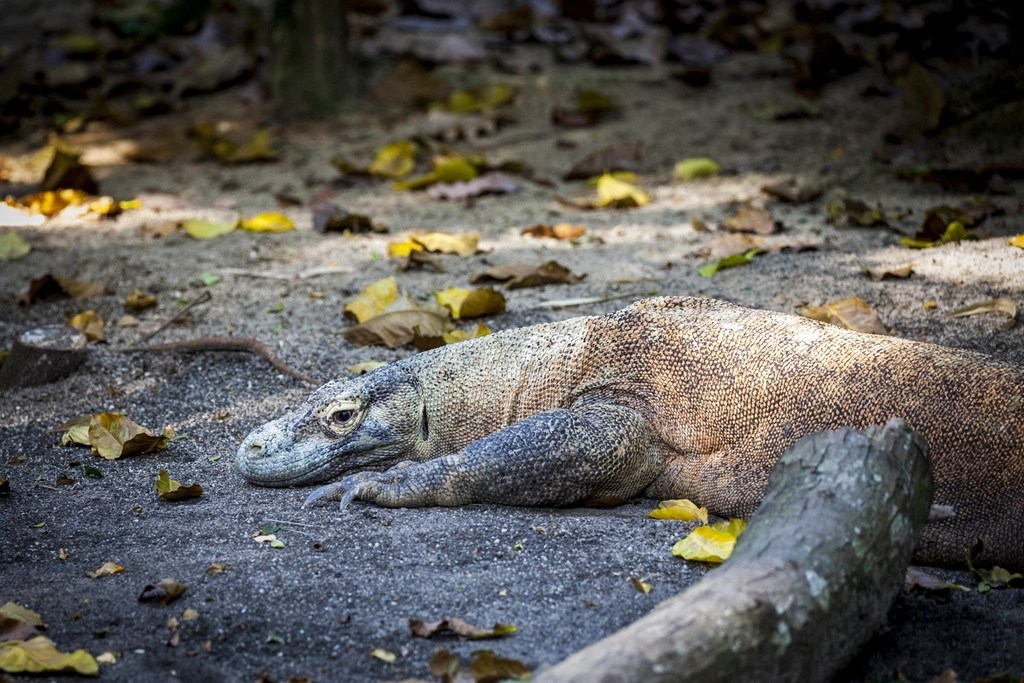
The concept of natural selection forms a key aspect of the theory of evolution, first put forward by Charles Darwin and Alfred Wallace in the mid-1800s. Essentially, natural selection is the process by which organisms that are better suited to the environment they are living in; tend to survive, reproduce, and pass on their stronger genes to their offspring. Conversely, organisms that cannot adapt to the surrounding environment die off. Figure 1 depicts a very good example of the same.
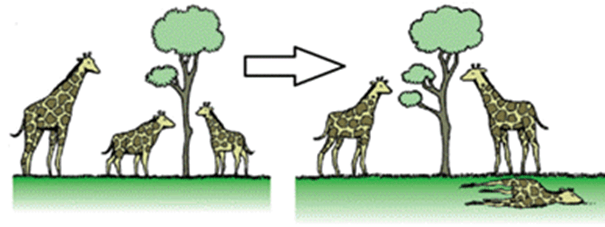
Natural Selection
Suppose a population of giraffes migrates to an area abundant with tall trees. In such an environment, tree leaves will be easily accessible to giraffes with longer necks. With more access to a major food source, these giraffes are more likely to survive compared to those with shorter necks. Hence, they are also likely to reproduce and pass on their genes to further generations of giraffes who will be born with longer necks. At the same, giraffes with shorter necks are less likely to survive due to limited access to their major food source. Eventually, after multiple millennia, short-necked giraffes would completely die off as they failed to adapt to the changed surroundings.
Island Rule
An interesting example of natural selection is Foster’s rule or the Island rule. In 1964, Mammologist J Bristol Foster came up with the idea that when members of a certain species get isolated on an island, they tend to change in size compared to their mainland cousins, hence evolving into a sub-species in some cases. Just like other aspects of natural selection, these changes take place over multiple millennia. Foster attributed these changes primarily to two major factors.
- Resource Availability
- Lack of predators
The impacts of Island rule can lead to 2 different phenomena; Insular (Island-based) Dwarfism and Insular Gigantism.
Insular Dwarfism
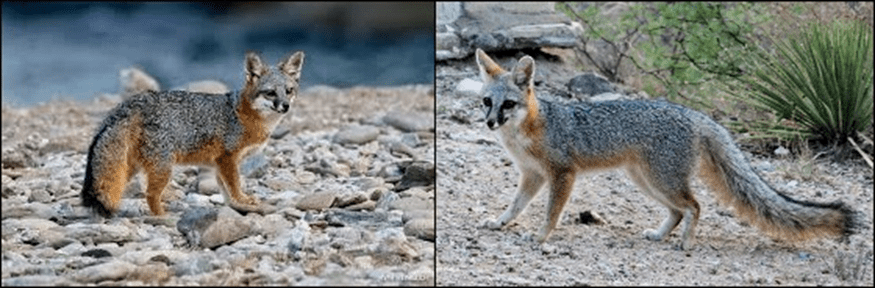
Insular Dwarfism is a phenomenon where the animals on an Island will evolve to become smaller than their mainland relatives. Limited food availability on the island plays a major role in this evolutionary change while lack of predators could also cause larger animals to evolve into smaller ones as there is a limited need to have a larger body for defence purposes. A prominent example of the same is the island fox. This species is found on the Channel Islands, off the coast of California. Having descended from the Gray Fox found on the mainland, this population could have arrived on the Channel Islands around 7000 years ago. Over a while, limited food resources meant that natural selection could have favoured smaller individuals as they needed lesser nourishment compared to the larger ones. Unable to adapt to the local environment, eventually the larger foxes died off, and the smaller ones survived passing on their genes to their present descendants. Interestingly, Island foxes have now evolved into not one but six different subspecies. These are unique to each of the six Islands on which they are found, having adapted to their local environments.
Insular Gigantism

Insular Gigantism is a phenomenon where small animal species will evolve to become larger than their mainland relatives. Just like Dwarfism, Food availability is a major factor influencing gigantism. Let us consider the example of the dodo. Dodos were massive flightless birds found on the island of Mauritius, which measured around 62-75 cm in length. Unfortunately, they went extinct around the 17th century due to poaching. Genetic evidence shows that the closest relative of the dodo was the Nicobar pigeon (measuring around 40 cm), primarily found on India’s Nicobar Islands as well as in parts of Southeast Asia (SEA). Considering the massive distance of more than 5000 km between Mauritius and SEA, this finding seems rather odd. However, it has been hypothesized that the ancestors of these two species split up around 20-30 million years ago when Mauritius and SEA were much closer thanks movement of tectonic plates. When these birds arrived in Mauritius, they must have found an abundance of food and resources and a lack of competitors for these resources, which led them to attain such a massive size. Besides, the lack of predators meant that there was no need to fly to survive. Hence, through natural selection, they also lost the ability to fly, becoming the dodos we know today.
Final Thoughts
Numerous factors, including fluctuating climatic conditions and the size of the island, play a role in the Island Rule phenomenon. It’s fascinating to see how even small changes in the environment can profoundly affect species evolution over thousands of years. Natural selection is a perpetual process that will continue indefinitely. Therefore, it wouldn’t be unusual to witness some animal species we know today either becoming extinct or evolving into completely new forms.
References
- https://www.sciencedaily.com/releases/2021/04/210415114108.htm
- https://www.nature.com/articles/s41559-021-01426-y
- https://onlinelibrary.wiley.com/doi/10.1111/jbi.13160
- https://academic.oup.com/evolut/article/60/8/1731/6756529?login=false
- https://phys.org/news/2021-04-island-gigantism-dwarfism-result-evolutionary.html
- https://www.sapiens.org/biology/island-dwarfism/
- https://www.imperial.ac.uk/news/219453/islands-give-rise-evolutionary-giants-dwarfs/
- https://www.nature.com/articles/202234a0
- https://www.science.org/doi/10.1126/science.295.5560.1683
- https://www.sapiens.org/biology/island-dwarfism/


 Scientia
Leave a reply to Yatin s. Kamat Cancel reply