![Create a logo for a science-focused website [that embodies innovation] [and curiosity] [while exuding a modern and sleek aesthetic] that reflects a passion for scientific exploration. [It should integrate scientific elements] [and incorporate a sense of discovery].](https://scie99.blog/wp-content/uploads/2024/03/img-hxn9yfw6zqxcvavcolisqsxq.png)

From 1930 to 2006, 9 planets were known to exist in our solar system. But sadly, Pluto was demoted to the status of a ‘dwarf planet’ in the year 2006 by the International Astronomical Union (IAU). Yet for decades, there have been discussions about the existence of a massive planet, much bigger than the likes of Pluto, beyond Neptune’s orbit. But do we have any solid evidence for the existence of such a celestial body? And with the advent of modern telescopes, is it possible to spot this hypothetical planet?
History
Since the 1840s there has been a chatter in the astronomy community about a 9th Planet. These speculations stem from the irregularities observed in the orbit of Uranus. Interestingly, similar irregularities in Uranus’ orbit led to discovery of Neptune. To put it simply, Uranus’ movement across the night sky was different from what astronomers predicted. This meant that there could be another celestial body massive enough that its gravity was influencing Uranus’ Orbit, which lead to the discovery of Neptune. In spite of this remarkable discovery, there were speculations that one planet was not enough to explain these orbital discrepancies.
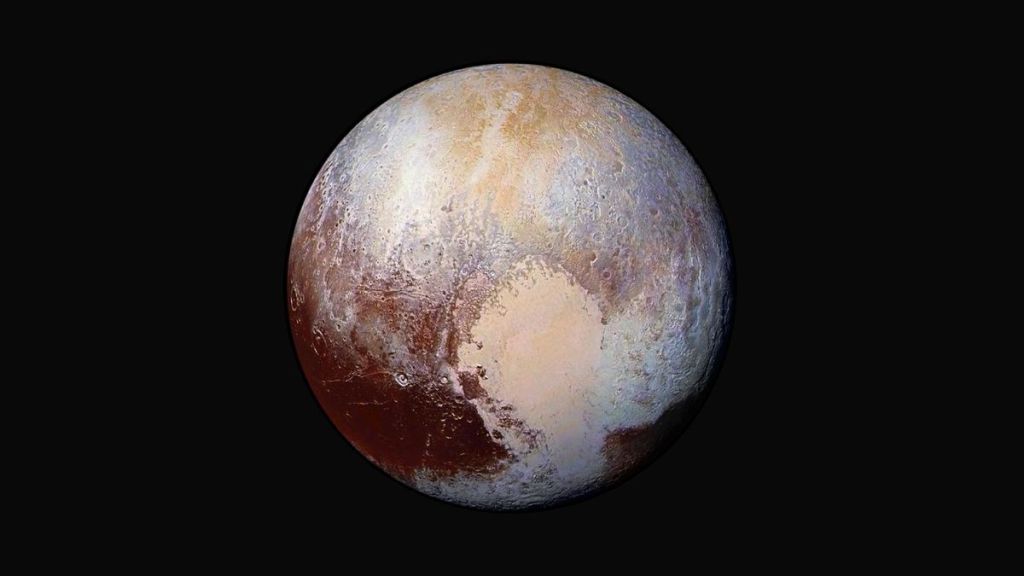
Discovery of Pluto in 1930 seemed to have explained Uranus’ orbit and the “planet X” that all astronomers had been looking for, was finally found. But this would be proven otherwise a few decades later when Pluto’s biggest moon, Charon was discovered. Essentially, until the discovery of Charon in 1978, it was nearly impossible to correctly predict Pluto’s Mass. Post-1978, it was finally determined that Pluto’s mass was 0.2% that of Earth’s. This means that Pluto’s gravity was way too less to influence the orbits of gas giants like Uranus and Neptune. Moreover, using data retrieved from Voyager 2 space probe’s mission to Neptune in 1989, it was determined that Neptune’s mass was miscalculated. The revised mass data meant that Neptune was solely influencing Uranus’ orbit and existence of “planet X” was completely disproved.
New evidence
Since 1992 multiple small celestial objects have been discovered beyond Neptune’s orbit called as trans-Neptunian objects (TNOs). These TNOs together form the Kuiper belt, very similar to the asteroid belt between Mars and Jupiter. Interestingly, some of these TNOs have highly elliptical orbits. Figure 3 shows the orbit of a TNO named Sedna in comparison with orbits of other planets in the solar system. Further figure 4 shows the orbits of some other TNOs discovered in the past 2 decades and the speculated orbit of planet 9.

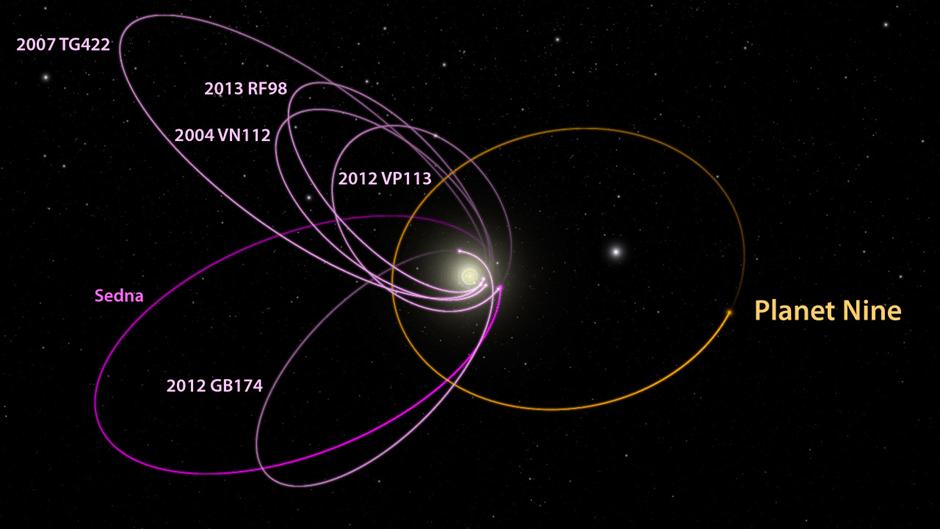
According to some recent research papers published by astronomers from the California Institute of Technology, Konstantin Batygin and Micheal Brown, these eccentric orbits can be attributed to the existence of the supposed planet 9 in the far reaches of our solar system. Just like Neptune influencing Uranus’ orbit, planet 9’s gravity could be influencing the orbits of these TNOs. According to models developed by Prof. Batygin and Prof. Brown’s team, planet 9 is predicted to be 5-10 times the size of Earth and could be taking around 10000 to 20000 years to orbit the sun. For Reference Neptune takes about 165 years to orbit the sun, which says a lot about how far away from other planets would planet 9 be.
Conclusion
Now the question is if planet 9 exists, why hasn’t it been spotted yet on telescopes? Distance definitely could be a factor especially if the current position of planet 9 is close to its aphelion (point in the planet’s orbit when it is farthest from the sun). But Prof. Batygin and Prof. Brown are confident that some of the most powerful telescopes will soon catch a glimpse of this unknown world.
Thank you for reading, would love to know your opinions below.
References
- https://arxiv.org/pdf/2404.11594
- https://phys.org/news/2024-04-evidence-planet.html
- https://www.space.com/planet-9-cometary-bodies-neptune-solar-system
- https://link.springer.com/article/10.1007/BF01234554
- https://www.sciencedirect.com/science/article/abs/pii/S037015731930047X?via%3Dihub
- https://www.journals.uchicago.edu/doi/10.1086/349825
- https://astronomynow.com/2016/06/13/extreme-trans-neptunian-objects-lead-the-way-to-planet-nine/
- https://www.space.com/31677-astronomers-could-see-planet-nine.html


 Scientia
Leave a reply to Anurag Cancel reply