![Create a logo for a science-focused website [that embodies innovation] [and curiosity] [while exuding a modern and sleek aesthetic] that reflects a passion for scientific exploration. [It should integrate scientific elements] [and incorporate a sense of discovery].](https://scie99.blog/wp-content/uploads/2024/03/img-hxn9yfw6zqxcvavcolisqsxq.png)
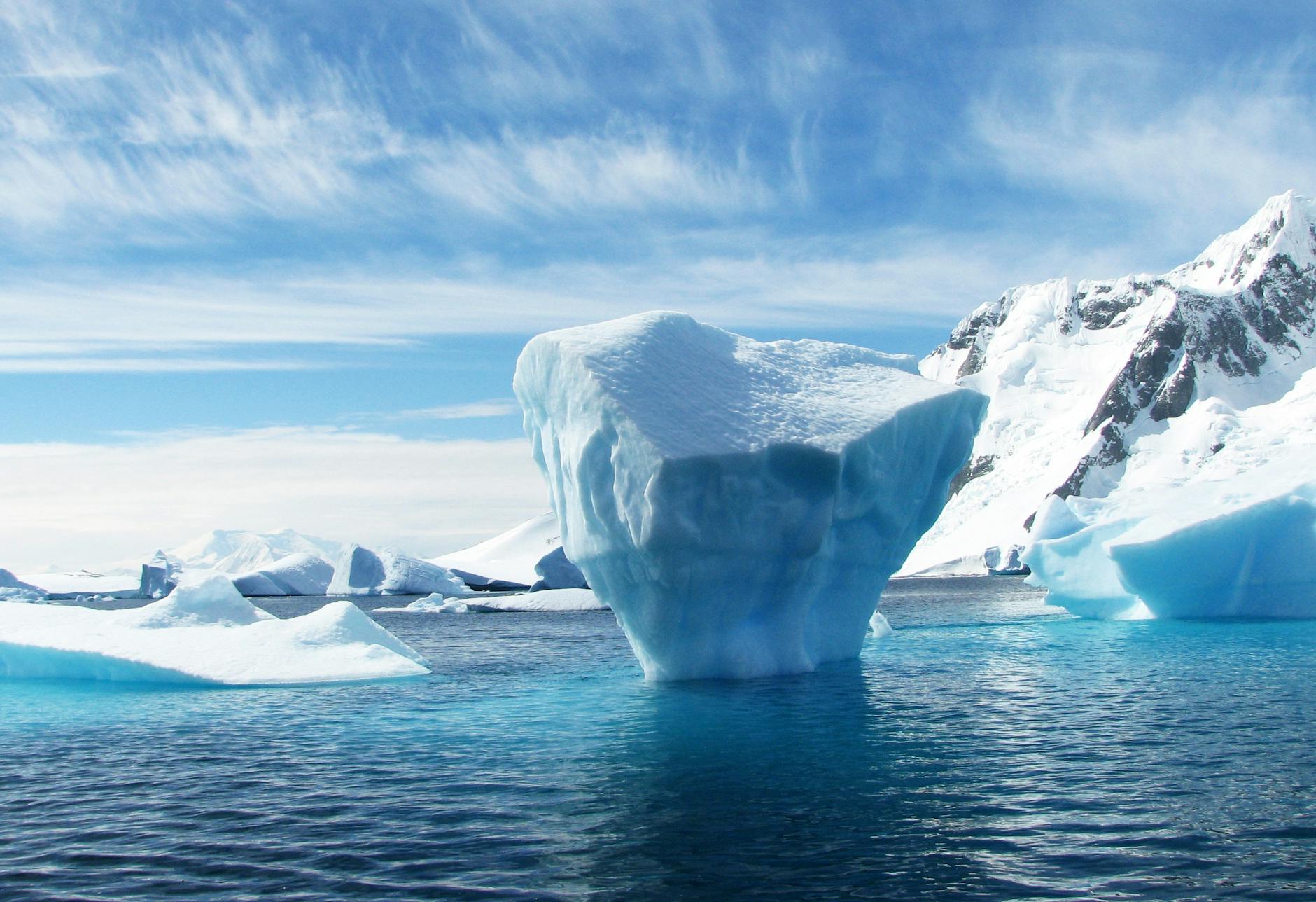
Climate change is predicted to have an impact on various aspects of life. Warmer temperatures changing weather patterns, rise in sea levels in some parts of the world are just a few examples of the same. While changes in sea levels are predicted to impact low lying island states like Maldives and Kiribati, earth’s rotation may also be affected by this. According to a recent research article by Professor Duncan Agnew from Scripps institution of Oceanography, melting of polar ice could slightly slow down Earth’s rotation.
Earth’s rotation has overall slowed over the past millions of years i.e. days have gotten longer by around 3 hours over the past 550 million years. But on a shorter time scale, Earth’s rotation undergoes minor variations as well. Over the past 50 years, Earth’s rotation has speeded up. In fact 29th June 2022 being the shortest day in recorded history. This speed up has led to a need to add a leap second every few years since 1972.
But what is the significance of adding a leap second?
Well, since 1955 atomic clocks have been in prominent use to measure time due to their accuracy. These clocks lead to the formation of international atomic time (TAI). The standard system for civil timekeeping, UTC needs to be adjusted to TAI regularly due to the aforementioned variations in Earth’s rotation. This adjustment is done by adding a leap second every few years. 27 leap seconds were separately added between 1972 and 2016.
Earth’s rotation is influenced by various factors like Moon’s tidal forces, changes in the Earth’s molten core etc. While Moon’s gravity causes the Earth to slow down, changes in the Earth’s core has an opposite effect. And this effect has been more prevalent over the past 50 years leading to “slow down of Earth’s rotational slowdown” according to Professor Agnew. If this continues, there would be a need to add a negative leap second in the future.
Addition of leap seconds cause major issues computing systems and servers around the world leading to outages like those in 2012 and 2015. A negative leap second has been never been added before but doing so, will also have similar consequences. Hence there is a prominent campaign by tech giants such as Meta and Google to altogether get rid of leap seconds. Whether this will happen or not is debatable but as per Professor Agnew’s article, the need to add leap seconds frequently could reduce due to melting of polar ice.
Melting of polar ice causes the overall mass to shift towards the equator in form of water. Hence in order to conserve angular momentum, angular velocity will need to be reduced hence slowing down the Earth’s rotation. This slightly counteracts the impact Earth’s core has been have been on Earth’s rotation. Professor Agnew calculates that without the impact of polar ice melt, a negative leap second would have to be added in 2026. At the other extreme, considering maximum possible impact of polar ice melt, there may not be a need to add any leap seconds until 2040.
While this phenomenon has delayed a recurring issue of leap seconds, it does not completely solve the problem of TAI and UTC being out of sync. In 2022, members of the International Bureau of weights and measures unanimously decided to drop leap seconds and look for other methods to keep UTC and TAI in sync.
Thank you for reading, would love to know your opinions below.
Reference
- https://www.nhm.ac.uk/discover/news/2024/march/climate-change-causing-days-get-longer-slowing-down-earth.html
- https://geo.phys.spbu.ru/materials_of_a_conference_2010/P2010/Zemtsov_2010.pdf
- https://www.theverge.com/2022/7/26/23278718/leap-second-computer-chaos-meta-backs-campaign-to-end-it
- https://www.astronomy.com/science/earth-is-spinning-faster-now-than-it-was-50-years-ago/
- https://www.cbsnews.com/news/earth-spinning-time-second-removed-world-clocks/
- https://www.theverge.com/2022/11/21/23470759/leap-second-scrapped-2035-time-computer-chaos
- https://www.nature.com/articles/s41586-024-07170-0


 Scientia
Leave a reply to Aryak Save Cancel reply